
Read the article:
and match the words/phrases from the text with their meanings.
1. pre-loved
2. dwindling natural resources
3. climate footprint
4. resource-intensive
5. aligned with someone’s values
a) the impact something has on the environment
b) needing a lot of materials or energy
c) previously owned and used
d) matching what someone believes in
e) becoming smaller or disappearing
Key: 1c); 2e); 3a); 4b); 5d)
Now decide if the sentences are True, False or Not Given.
1. Buying second-hand gifts always costs less than buying new ones.
2. Planting a tree can be an alternative to giving flowers.
3. Car-pooling is mentioned as an example of sharing resources.
4. All experience gifts are environmentally friendly.
5. Environmental organizations will never contact donors again.
Key: 1NG; 2T; 3T; 4F; 5F
Glossary
- quality pre-ensured – checked or verified for quality before being offered for sale
- toll – a very bad effect that something has on something or someone over a long period of time
- to dwindle – to become steadily less; to shrink
- carpooling – the activity of a group of people travelling together in a car, especially to work or school
- recipient – someone who receives something
Practice makes perfect
Complete the gaps in the article with the words in bold below:
toning down plain live up to price tag
beyond thrilled junk fancier gorgeous
(…) Want to become that good a giver? Follow these three evidence-based rules for giving good presents—just in time for the holidays!
Simple and practical is good. A 2009 study in the Journal of Experimental Social Psychology found that although givers tend to think a 1. ……….. , expensive gift will be appreciated more, receivers are actually happier with cheaper, more practical presents. (…) “You think that things like price and the effort you put into a gift will matter, but the person you’re giving it to doesn’t see the work that went into it or the 2. ………. —they just have the actual thing to focus on and how it will fit into their life,” says Nathan Novemsky, a professor of marketing at Yale University who has done quite a bit of research on gift giving himself. (…)
Don’t overdo the gift wrap. When Novemsky told me about some research he is doing now that suggests wrapping a present in a 3. ……… brown paper bag—or not at all—might be better than something 4. ………. and beribboned, I thought, “No way! This is total holiday heresy.” (…) But it made sense once he explained: pretty wrapping raises expectations for a gift and increases the risk of the receiver being disappointed if the present doesn’t 5. ………… them. “It’s like giving someone a Sears gift card in a Tiffany box,” he says. So unless you’re sure the gift is going to kill—there’s a Tiffany ring in that Tiffany box—consider 6. …………. the packaging.
Ask what the person wants. I used to think my husband’s family was super weird for giving one another gift lists at Christmas and on birthdays. Where’s the surprise? The effort? The proof that you know the person so well that you can divine exactly what he or she wants without asking? But there comes a point in your life when you just don’t want any more useless—though well-intentioned—7. ……….. . So when John asked me what I might like for my birthday last year, I told him exactly what I wanted: (…) When he gave it to me as requested, I was 8. …………. . Research from Harvard and Stanford business schools published in 2011 found that gift receivers in general are much happier when they’re given exactly what they asked for rather than something “thoughtful” that wasn’t on their list.
This year, instead of filling John’s stocking with random stuff I think he’ll like, I’m going to ask him to cc me on his Christmas gift e-mail to his mom. And then I’ll get him exactly what he wants.
In order to read the whole article, go to: https://www.scientificamerican.com/article/3-ways-to-be-a-better-gift-giver/
Key: 1. fancier; 2. price tag; 3. plain; 4. gorgeous; 5. live up to; 6. toning down; 7. junk; 8. beyond thrilled
Discuss
- Which of the five eco-friendly gift ideas do you find the most realistic? Why?
- Have you ever given or received a second-hand or “pre-loved” gift? How did it feel?
- Are experiences better gifts than physical objects? Give examples.
- Why do people often think expensive or fancy gifts are better?
- Do you agree that simple and practical gifts make people happier?
- Have you ever been disappointed because a gift looked better than it actually was?
- Do you like being asked what you want as a gift, or do you prefer surprises? Why?
- Think of the best gift you have ever received. Why was it special?
- Think of a gift that didn’t work well. What went wrong?
- Do you think people give gifts more for the receiver or for themselves?
Watch and Revise!
Eco-Friendly Christmas Gifts & Better Gift Giving Tips
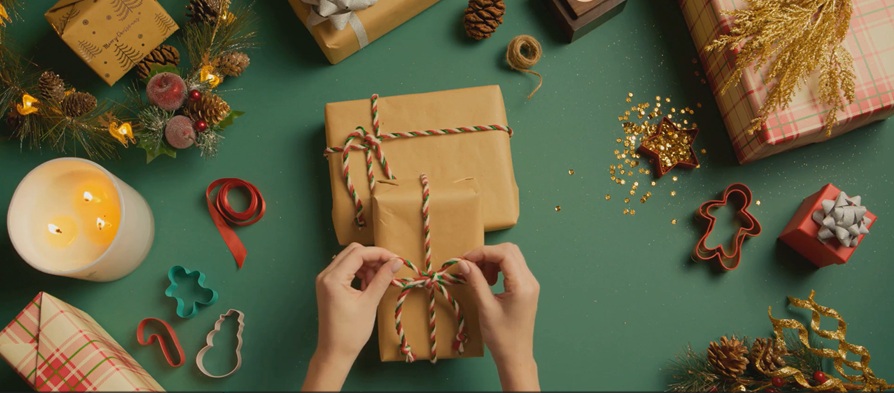
https://www.cloud.worldwideschool.pl/index.php/s/ojS3Dx3aC3G89jy
(6741)


