A study shows people who read books live 20 percent longer than those who do not.
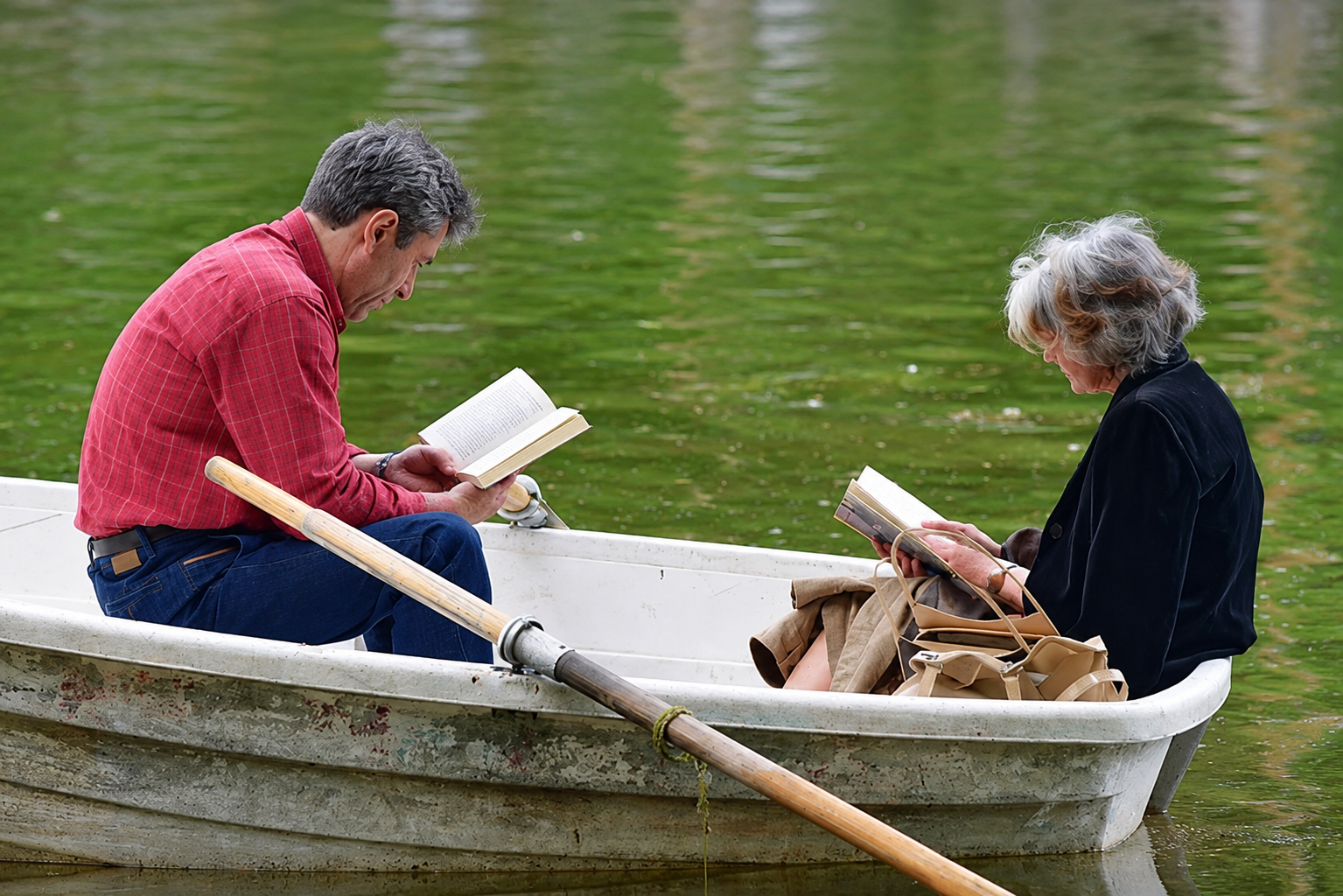
Read the article and choose the correct answer a)–d) for each question below:
1. According to the article, reading books…
a) guarantees a longer life.
b) is associated with a longer life.
c) only improves intelligence.
d) mainly benefits children.
2. Why might books be more beneficial than magazines?
a) They contain more words.
b) They are usually cheaper.
c) They require deeper mental engagement.
d) They improve eyesight.
3. The phrase “Granted, the results are correlational rather than causal” means that…
a) the relationship exists, but one may not directly cause the other.
b) the study proves nothing.
c) reading certainly causes people to live longer.
d) researchers made a mistake.
4. According to the author, many people could find reading time by…
a) waking up earlier.
b) watching less television.
c) reading during work.
d) spending less time on screens.
5. What does the article suggest about children who grow up in homes with more books?
a) They are more likely to become professional writers.
b) They tend to perform better in literacy, maths, and technology as adults.
c) They enjoy reading more than playing games.
d) They usually attend better schools.
6. According to the article, reading books may reduce stress because…
a) it makes people sleep longer.
b) it encourages people to relax instead of constantly checking their phones.
c) it improves memory immediately.
d) it helps people forget their problems permanently.
Key: 1b); 2c); 3a); 4d); 5b); 6d)
Glossary
- inherently – by its very nature; as a natural or essential part of something
- to settle in – to become comfortable and relaxed in a new place or situation
- lifespan – the length of time that a person, animal, or thing lives or exists
Practice makes perfect
Watch the video [3:57 – 12:03]
and choose the correct expression:
1. If someone goes out of their way, they…
a) take a shortcut.
b) make a special effort to help.
c) change their plans completely forever.
2. If something turns out to be difficult, it…
a) becomes less important.
b) is cancelled.
c) unexpectedly proves to be difficult.
3. Which expression means “to obtain something that is difficult to find”?
a) come across
b) get hold of
c) bring together
4. Which expression has the opposite meaning of comfort zone?
a) unfamiliar situation
b) blind spot
c) perspective
5. If someone goes to great lengths to do something, they…
a) spend a lot of money.
b) travel a very long distance.
c) make every possible effort to achieve it.
6. A blind spot is…
a) an area you fail to notice or understand.
b) a dangerous place to drive.
c) a hidden location.
7. If someone sticks to their word, they…
a) repeat the same thing many times.
b) keep the promise they made.
c) refuse to speak.
8. If an event brings people together, it…
a) causes an argument.
b) forces people to compete.
c) helps people meet and connect.
9. Something that broadens your perspective…
a) makes your opinion stronger.
b) helps you understand different ideas and ways of thinking.
c) makes you forget your own experiences.
10. If you come across an interesting book, you…
a) accidentally find or discover it.
b) borrow it from a friend.
c) buy it online.
Key: 1b; 2c; 3b; 4a; 5c; 6a; 7b; 8c; 9b; 10a
Discuss
Choose one statement and defend it:
- Reading books is becoming a luxury.
- Social media is replacing books.
- Audiobooks are just as valuable as printed books.
- Schools should require students to read for pleasure.
- Thirty minutes of reading every day would improve society.
Watch and Revise!
Read Books, Live Longer
The Science & Stories
https://www.cloud.worldwideschool.pl/index.php/s/WYaXw2KQJ2ZYnxJ
(7422)


