Here’s how to upskill for the age of AI.
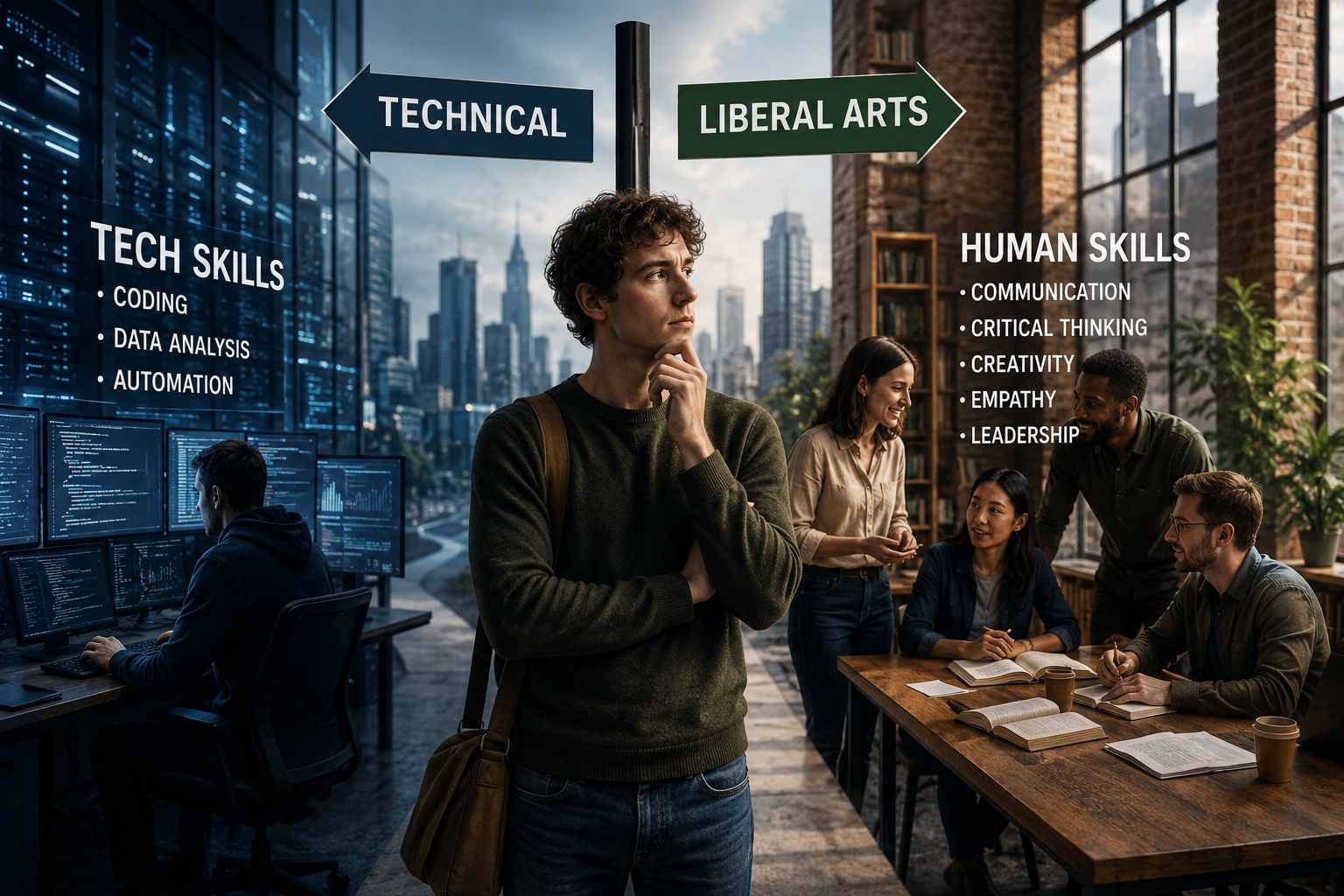
Read the article and choose the best meaning of the highlighted word or phrase.
https://www.inc.com/lou-shipley/tech-founder-liberal-arts-background-ai-defense/91374947
1. I cold-called the founder of Avid Technology.
a) called unexpectedly without an appointment
b) called because he was ill
c) called using someone else’s phone
2. AI is best suited at codifiable work.
a) work that can be easily turned into clear rules or instructions
b) work requiring physical strength
c) creative work
3. Liberal arts graduates have a head start.
a) graduate earlier
b) work harder than others
c) begin with an advantage
4. After the company expanded overseas, new opportunities were swinging wide open for its employees.
a) disappearing quickly
b) becoming much more available
c) becoming more competitive
5. AI is knocking down the technical barrier.
a) creating more obstacles
b) making something easier to access
c) replacing universities
6. Anyone can spin up an app over a weekend.
a) improve an existing app
b) advertise an app
c) design an app very quickly
7. Learn the AI tools, then out-judge
a) judge them more accurately than AI can
b) criticise AI
c) compete against AI
Key: 1a; 2a; 3c; 4b; 5b; 6c; 7a
Glossary
- to crunch data – to process and analyse large amounts of data in order to find useful information or patterns
- EQ – abbreviation for emotional quotient: a measurement of a person’s emotional intelligence (= their ability to understand their own feelings and the feelings of others)
- moat – a deep, wide ditch, usually filled with water, built around a castle to protect it from enemies; a lasting competitive advantage that protects a company from its competitors and makes it difficult for others to copy or outperform it
- discernment – the ability to make a smart judgment about something
Practice makes perfect
Fill in the gaps in the article extract below with the words in bold:
accelerate crucial enhance irreplaceable
matures spotlight curiosity repetitive
(…) I believe the skills that will matter most in an AI-driven workplace aren’t technical—they’re human. Critical thinking, adaptability, empathy and collaboration will define success. Adaptability matters because AI is evolving rapidly. Employees who bring 1. ………… and a learning mindset will be best prepared for what’s next.
Another essential capability is problem framing. AI can generate solutions at scale, but only if we ask the right questions. Framing problems clearly, interpreting results and applying them in context are all areas where human judgment is 2. ……………. .
This is where HR leaders have a 3. ……….. role to play—helping employees strengthen these skills, recognizing them when they’re demonstrated and making it clear that human contributions continue to matter, even as technology gets the 4. ………… .
Rethinking AI’s Value
When the internet first emerged, people feared mass unemployment. Instead, we saw new industries and roles no one could have predicted. AI will likely follow a similar trajectory, but faster.
As AI 5. ……….. , we must redefine what high-value talent looks like. For decades, programming and engineering have been the most prized skills. Going forward, high-value talent will mean the ability to think critically, empathize, collaborate and apply judgment in complex contexts.
Think of AI as an extension of a team. By taking on 6. ….……. tasks, surfacing insights quickly and providing personalized learning support, AI can help narrow skills gaps and 7. ………….. development. It can give employees the space to focus on higher value work while offering real-time feedback, coaching and resources that build new capabilities. AI in this way doesn’t just 8. …………. what teams can do today, it can actually help people grow into the skills they’ll need tomorrow. (…)
In order to read the whole article/check your answers, visit: https://www.forbes.com/councils/forbeshumanresourcescouncil/2025/10/08/in-the-ai-era-humanity-is-the-new-high-value-skill/
Key: 1. curiosity; 2. irreplaceable; 3. crucial; 4. spotlight; 5. matures; 6. repetitive; 7. accelerate; 8. enhance
Discuss
- Do you think a liberal arts education prepares people well for the future? Why?
- Is it more important to have technical skills or people skills nowadays?
- Do you think AI can ever replace good judgment? Why (not)?
- Would you trust AI to make important decisions (e.g. hiring employees, diagnosing illnesses, sentencing criminals)? Why?
- Which human skill is the hardest to teach: creativity, empathy, resilience, curiosity or communication?
- Have you ever succeeded because of your communication skills rather than your technical knowledge?
- Why is asking good questions becoming more important than knowing all the answers?
- What skill do you already have that AI probably won’t replace?
Watch and Revise!
Why Liberal Arts is the Ultimate AI Defence
https://www.cloud.worldwideschool.pl/index.php/s/siLMwRxcRtiB9De
(7431)


