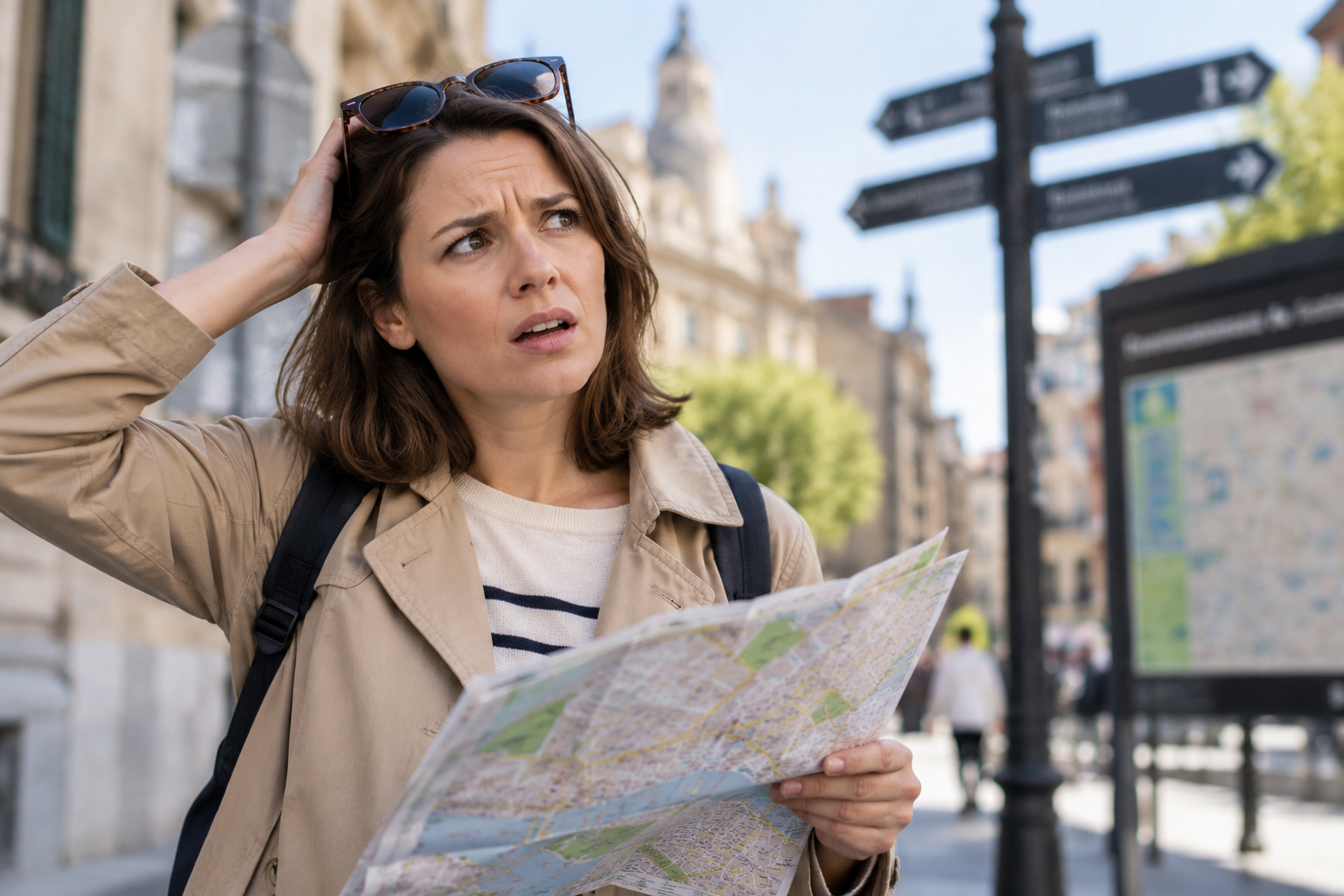
Experience may matter more than innate ability when it comes to a sense of direction.
Read the article:
https://www.scientificamerican.com/article/why-some-people-always-get-lost-and-others-never-do
and answer the questions in your own words:
1. What makes it difficult for scientists to explain why some people are better navigators than others?
2. What did the study involving identical and nonidentical twins reveal about the role of genetics?
3. Why might people living in cities with irregular street networks be better at navigation?
4. What does the Tsimane study suggest about gender differences in navigational ability?
5. How can anxiety and concerns about personal safety affect someone’s ability to find their way?
6. Why is survey knowledge particularly useful when people encounter an unexpected obstacle?
7. According to the article, what did researchers discover about people who relied heavily on GPS?
8. What practical strategies does the article suggest for people who want to improve their sense of direction?
Glossary
- innate – natural; something you are born with rather than learn or develop through experience
- to brew – to begin to develop or happen, especially when a feeling, situation or activity is gradually growing
- to underscore – to emphasise something or show that it is important
- to unfold – to happen or develop gradually over time
Practice makes perfect
Watch the video:
and complete the paragraph using the words in the box. There are two extra words.
landmarks hippocampus GPS repetition grid
striatum intelligence movement memory checkpoints
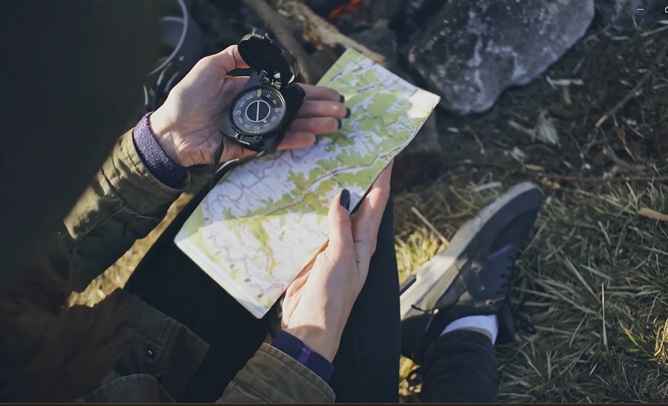
The brain uses two major structures to help us navigate: the (1) __________, which helps us learn familiar routes through (2) __________, and the (3) __________, which builds mental maps of our surroundings. Specialised place cells and (4) __________ cells help the brain represent locations and distances. Navigation is a distinct cognitive skill and is not simply a measure of general (5) __________. However, the brain can adapt through training and experience. For example, paying attention to (6) __________ and getting more physical (7) __________ can help us develop stronger spatial skills. Although (8) __________ can be convenient, relying on it too much may make it harder to create accurate mental maps.
Key: 1. striatum; 2. repetition; 3. hippocampus; 4. grid; 5. intelligence; 6. landmarks; 7. movement; 8. GPS
Discuss
- Would you describe yourself as someone with a good or poor sense of direction? Why?
- When visiting a new city, do you rely on GPS, follow landmarks or try to build a mental map?
- Have you ever got seriously lost? What happened, and how did you find your way?
- Do you think children today have fewer opportunities to develop navigational skills because of smartphones?
- Should parents encourage children to explore independently, or are the risks too great?
- Could relying too heavily on technology weaken other abilities, such as memory, problem-solving or critical thinking?
- Have you ever followed GPS directions that turned out to be wrong or confusing? What did you do?
Watch and Revise!
Unlocking Your Inner Navigator
How Experience Shapes Your Sense of Direction
https://www.cloud.worldwideschool.pl/index.php/s/2pDakfqgGATsjNB
(7740)


