JC Foster’s startup is betting consumers will start caring about what their appliances are made of, not just what they do.
WORD FORMATION:
Change the word in CAPITALS to fill in the blanks.
JC Foster left the aerospace giant to launch Puresteel, a startup building what he described as “an 1. ……….. [AFFORD], 2. ……….. [CONVENIENCE], plastic-free coffeemaker,” he wrote in a post on X.
For Foster, developing Puresteel was about more than a 3. ………. [PERFECT] brewed cup of coffee at a precise 200°F. “Creating Puresteel was about solving a problem that hits close to home and helping humans thrive,” he wrote in the company’s Note from the Founder.
The problem, as he saw it, was plastic.
Foster began searching for a completely plastic-free coffee machine and quickly discovered the category didn’t quite exist. High-end specialty brewers made largely of metal cost thousands of dollars, while everyday machines advertised as stainless steel still relied on hidden plastic valves, tubing, and water reservoirs, 4. ……….s [COMPOSE] that heat 5. ……….. [REPEAT] and can shed microscopic particles into drinks.
So he decided to build the product he couldn’t buy.
Puresteel’s machine uses medical-grade stainless steel and glass instead of polymer components. The materials are intended not only to avoid chemical 6. ………… [EXPOSE] but also to last longer and look cleaner on a countertop. The bigger 7. ……….. [DIFFERENTIATE], though, is price: The company says its 12-cup brewer will cost about $80, positioning it closer to a mass-market appliance than a luxury one, according to its website.
Foster’s 8. ………. [MOTIVATE] extended beyond taste. Research has increasingly focused on the dangers of widespread plastic exposure.
A University of New Mexico study detected microplastics in every human placenta sample tested, while separate cardiovascular research published in The New England Journal of Medicine associated higher microplastic levels in arterial plaque with 9. ……….. [SIGNIFICANT] elevated risks of heart attack or stroke. Another paper in Food Chemistry found rising 10. …………s [CONCENTRATE] of plastic particles in brain tissue over time, with levels spiking 50 percent since 2016. (…)
In order to read the whole article/check your answers, go to: https://www.inc.com/leila-sheridan/ex-spacex-engineer-unveils-an-80-plastic-free-coffee-maker-as-microplastic-health-risks-rise
Key: 1.affordable; 2. convenient; 3. perfectly; 4. components; 5. repeatedly; 6. exposure; 7. differentiator; 8. motivation; 9. significantly; 10. concentrations
Glossary
- to thrive – do well and be successful, healthy, or strong
- valve – a device attached to a pipe or a tube which controls the flow of air or liquid through the pipe or tube
- to shed – to release or lose small pieces
- placenta – the temporary organ that feeds a foetus (= developing baby) inside its mother’s womb
- spiking – rising very quickly and sharply
Practice makes perfect
Watch the video:
and complete the sentences with the words in bold:
plastic inflammation chemicals indoor environment
particles containers exposure tissues products
1. Our ………… determines how much plastic we breathe.
2. Plastic ……….. can release harmful substances when heated.
3. These tiny ……….. can enter our tissues.
4. The body reacts by causing …………
5. Plastic contains thousands of ………… .
6. ……….. is now found in food, air, and water.
7. Long-term ……….. to plastic may harm your health.
8. …………. air often contains more microplastics than outdoor air.
9. These particles can build up in body ………… .
10. Many everyday ………… contain hidden plastic.
Key: 1. environment; 2. containers; 3.particles; 4. inflammation; 5. chemicals; 6. plastic; 7. exposure; 8. indoor; 9.tissues; 10. products
Discuss
- What are microplastics, and how do they enter the human body according to the video?
- Which research finding mentioned in the article surprised you the most, and why?
- Do you think people currently pay attention to what their appliances are made of? Why or why not?
- Do you think “plastic-free” products can realistically become mainstream? What challenges might they face?
- Would you personally pay more for a product that avoids plastic? Why or why not?
- Should governments regulate the use of plastic in appliances and food-related products?
- Can small individual choices (like buying a different coffeemaker) actually make a meaningful impact?
Watch and Revise!
Why Your Coffeemaker Might Be Harming You
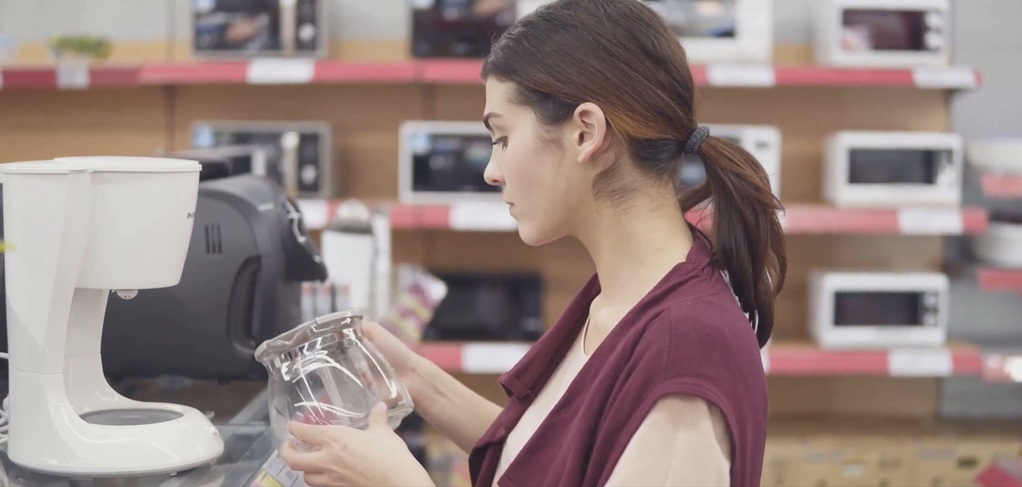
https://www.cloud.worldwideschool.pl/index.php/s/jMGXDAgC79WjTPd
(7126)


